In the fast-paced world of Business Intelligence (BI), implementing an effective ETL (Extract, Transform, Load) process is crucial for transforming raw data into actionable insights. DataLoyalty, a leader in BI solutions, offers a comprehensive guide to mastering ETL processes, ensuring your data is not only accurate but also strategically valuable.
Understanding the ETL Process
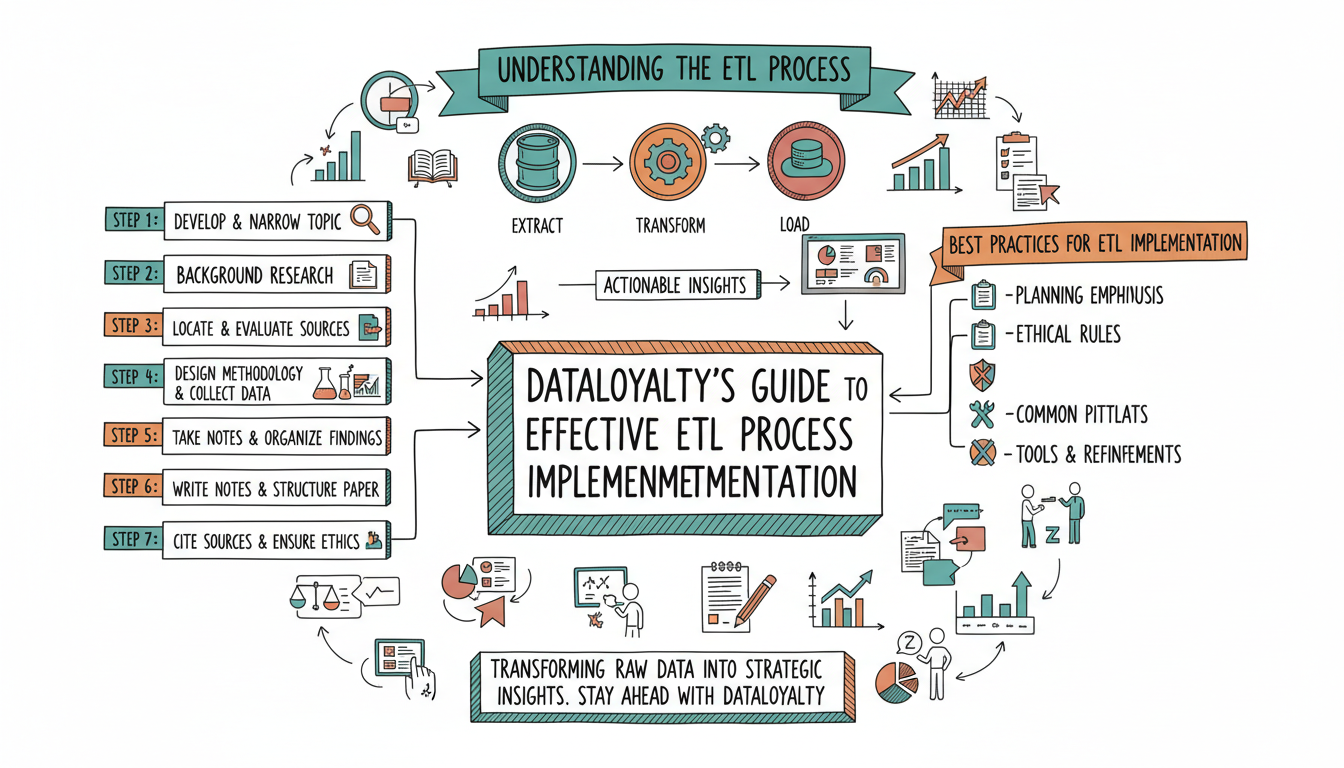
The ETL process is the backbone of data management in BI. It involves extracting data from various sources, transforming it into a suitable format, and loading it into a data warehouse or BI platform. This process is essential for creating reliable dashboards, data visualizations, and reports that drive informed business decisions.
Step 1: Develop and Narrow the Topic
Before diving into ETL, it's important to define your data objectives clearly. Begin by selecting a specific, manageable topic to avoid information overload. Narrow your focus by considering sub-topics, time periods, or demographics. For instance, using frameworks like PICOT (population, intervention, comparator, outcome, time frame) can help in formulating precise research questions that are both complex and answerable (source).
Step 2: Conduct Background Research and Literature Review
Gathering initial sources is crucial to building a solid foundation of knowledge. Identify gaps, debates, or contradictions in existing literature. Summarize key studies and critically assess their strengths and weaknesses. Highlight how your ETL process addresses these gaps, ensuring your approach is both innovative and effective (source).
Step 3: Locate and Evaluate Sources
Identify the types of sources you need, such as books, articles, or databases. Use effective search strategies and keywords to find credible information. Distinguish between primary and secondary sources, and evaluate their relevance to your ETL process (source).
Step 4: Design Methodology and Collect Data
Define your research design, whether qualitative, quantitative, or mixed. Specify data collection tools, participants, sample size, and analysis methods. For exploratory research, keep your hypotheses open, while confirmatory research requires detailed hypotheses (source).
Step 5: Take Notes and Organize Findings
Meticulously document your sources, including titles, authors, and URLs. Create rough drafts and outlines to structure your findings logically. Analyze data and interpret results cautiously, avoiding over-reliance on statistical significance (source).
Step 6: Write and Structure the Paper
Your final output should include a well-structured paper with an introduction, literature review, methodology, results, discussion, and conclusions. Address counterarguments and ensure your findings are based on solid evidence (source).
Step 7: Cite Sources and Ensure Ethics
Use citation styles like MLA, APA, or Chicago to credit your sources. Avoid plagiarism and questionable practices, and promote openness in your research. Ethical research practices are essential for maintaining credibility and trust (source).
Best Practices for ETL Implementation
- Planning Emphasis: Good preparation through notes and organization leads to coherent results. Plan your sample size and outcomes early (source).
- Ethical Rules: Narrowly specify questions and avoid questionable practices. Be cautious with statistics and promote openness (source).
- Common Pitfalls: Avoid broad topics that can overwhelm. Address gaps in literature and ensure thorough note-taking for accurate bibliographies (source).
- Tools and Refinements: Utilize tools like Zotero or MyBib for managing citations. Start with broad reading, then narrow your focus (source).
By following DataLoyalty's guide, BI professionals, data analysts, and business leaders can implement an effective ETL process that transforms raw data into strategic insights. This comprehensive approach ensures your data-driven decisions are both informed and impactful, keeping your organization ahead in the competitive BI landscape.