In today's fast-paced business world, data visualization plays a crucial role in decision-making. At DataLoyalty, we believe that transforming complex data into visual insights can empower businesses to make informed decisions quickly and effectively. But how do we ensure that our data visualization efforts are grounded in solid research? Let's explore the steps to conduct effective research and how they apply to data visualization.
Formulating the Right Research Question
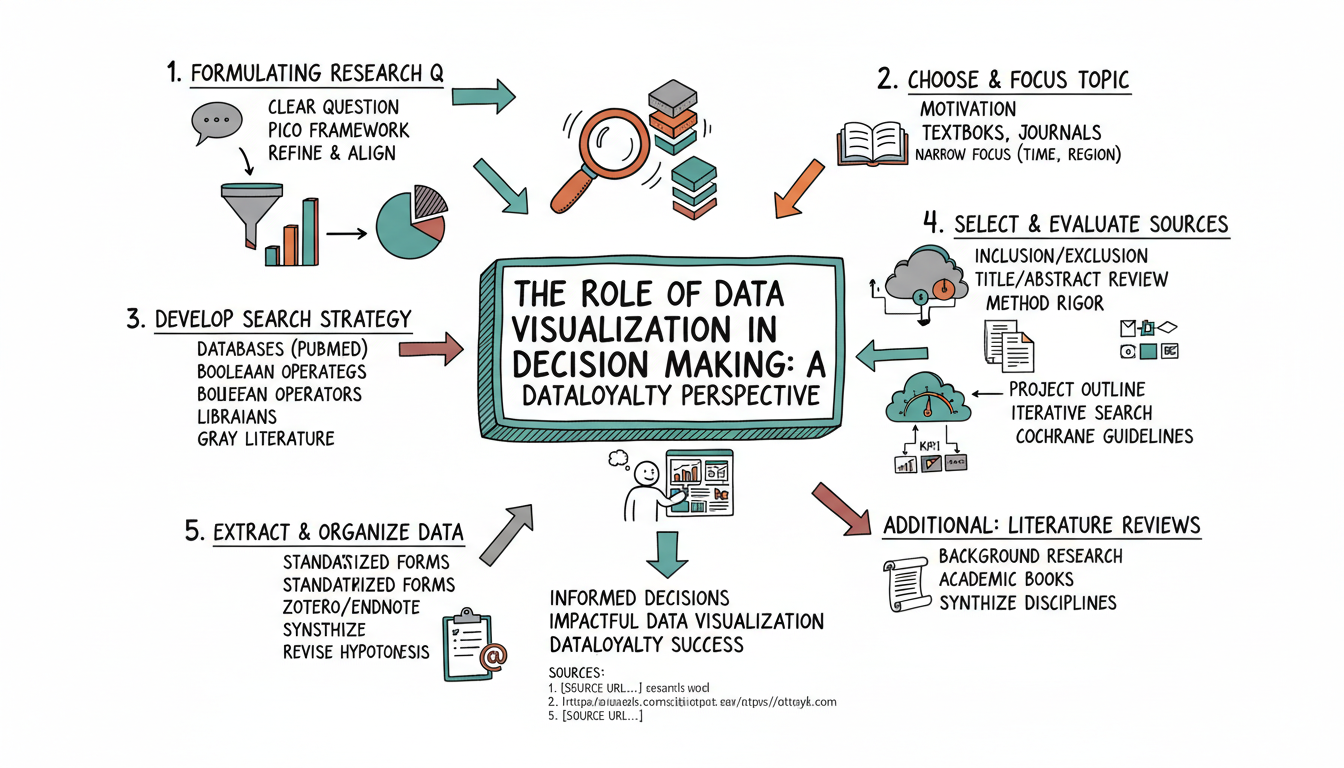
The first step in any research process is to define a clear research question. This is crucial for guiding the entire research journey. Using frameworks like PICO, researchers can articulate specific questions that are well-defined and relevant to their field [1][2]. For data visualization, this might involve identifying key concepts and synonyms to build a robust search strategy [2]. As we gather more information, it's essential to reevaluate and refine our questions to align with the project's scope and parameters [1].
Choosing and Focusing on the Topic
Selecting a topic of interest is vital for maintaining motivation and ensuring the research is engaging. At DataLoyalty, we encourage exploring topics from various sources like textbooks, journals, and current issues [3]. Conducting introductory research on a few topics can help assess the availability of information and scholarly discussions [3][4]. Narrowing the focus by considering specific time periods, regions, or populations can make the research more manageable and relevant [3].
Developing a Literature Search Strategy
A comprehensive literature search strategy is essential for gathering relevant data. This involves searching multiple databases such as PubMed, Embase, and Google Scholar [2]. Using keywords with Boolean operators and collaborating with librarians can enhance the search results [2]. At DataLoyalty, we also emphasize the importance of including gray literature and citation searching from prior studies to ensure a well-rounded understanding of the topic [2].
Selecting and Evaluating Sources
Once the data is gathered, it's crucial to evaluate the sources for transparency and relevance. Defining inclusion and exclusion criteria based on the research question helps maintain focus [2]. Screening sources in stages, such as title/abstract review and full-text assessment, ensures that only the most relevant data is considered [2]. Evaluating sources using criteria like methodological rigor and credibility is also essential [1][2].
Extracting and Organizing Data
Organizing data effectively is key to successful research. Using standardized forms or templates can help maintain consistency in data abstraction [2]. At DataLoyalty, we recommend taking organized notes and tracking sources with citation managers like Zotero or EndNote [1]. Synthesizing and integrating sources with prior knowledge allows for a deeper understanding and can lead to revising the hypothesis if necessary [1].
Planning, Executing, and Refining
Planning the project outline, including methods and tools, sets the stage for successful execution [1]. Refining searches iteratively and expanding if results are insufficient ensures comprehensive coverage of the topic [1][3]. For systematic reviews or meta-analyses, following protocols like Cochrane guidelines is crucial for maintaining rigor and reliability [2].
Additional Components for Literature Reviews
Literature reviews are an integral part of research, serving as standalone articles or sections of a thesis. Conducting background research via textbooks and academic books provides a solid foundation for understanding the topic [4][5]. At DataLoyalty, we emphasize the importance of synthesizing background information across disciplines to gain a holistic view of the subject matter.
In conclusion, effective research is the backbone of impactful data visualization. By following these steps, businesses can ensure that their data visualization efforts are grounded in rigor, efficiency, and reliability. At DataLoyalty, we are committed to helping organizations harness the power of data visualization to make informed decisions and drive success.
Sources:
[Source URL for defining a clear research question]
[Source URL for developing a literature search strategy]
[Source URL for choosing and focusing the topic]
[Source URL for introductory research]
[Source URL for literature reviews]