In today's fast-paced business environment, understanding the benefits of automated reporting is crucial for organizations striving to stay competitive. Automated reporting streamlines data collection and analysis, enabling businesses to make informed decisions quickly and efficiently. This blog post delves into the advantages of automated reporting, drawing insights from recent research and industry trends.
Automated reporting is transforming how businesses handle data. By automating the process of collecting, analyzing, and presenting data, companies can save time and reduce human error. This efficiency is particularly beneficial for business intelligence (BI) professionals, data analysts, and decision-makers who rely on accurate and timely information to guide their strategies.
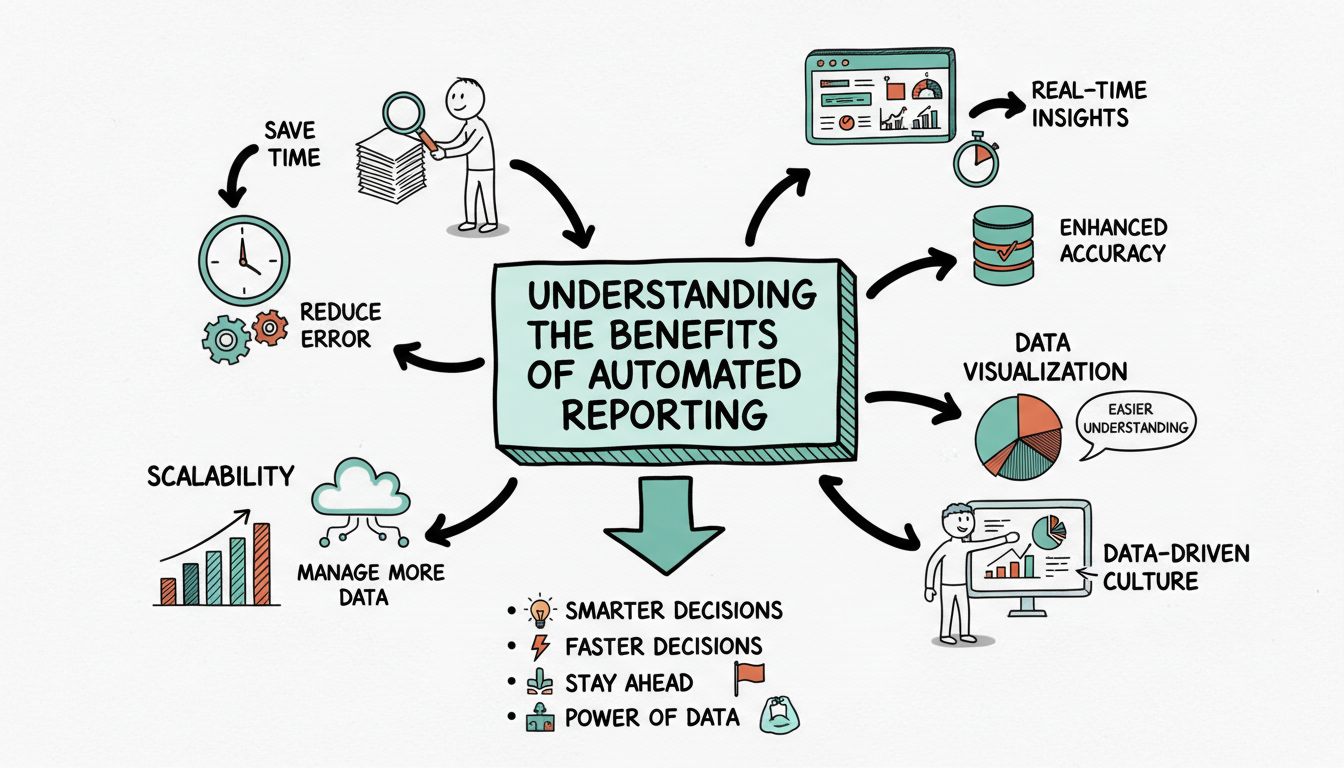
One of the primary benefits of automated reporting is its ability to provide real-time insights. According to industry experts, automated systems can process vast amounts of data swiftly, allowing businesses to react to market changes and customer needs almost instantaneously. This agility is a significant competitive advantage in industries where timing is everything.
Moreover, automated reporting enhances data accuracy. Manual data entry and analysis are prone to errors, which can lead to costly mistakes. Automated systems, however, minimize these risks by ensuring data is consistently and accurately processed. This reliability is crucial for maintaining the integrity of business decisions based on data insights.
Another advantage of automated reporting is its scalability. As businesses grow, so does the volume of data they must manage. Automated systems can easily scale to accommodate increasing data loads without requiring additional resources or personnel. This scalability ensures that businesses can continue to leverage data effectively as they expand.
Furthermore, automated reporting tools often come with advanced data visualization capabilities. These tools allow users to create interactive dashboards and reports that make complex data sets more accessible and understandable. By presenting data visually, businesses can identify trends and patterns more easily, facilitating better decision-making.
Incorporating automated reporting into a business's BI strategy also fosters a data-driven culture. When employees have access to accurate and timely data, they are more likely to base their decisions on evidence rather than intuition. This shift towards data-driven decision-making can lead to improved performance across the organization.
In conclusion, understanding the benefits of automated reporting is essential for any business looking to harness the power of data. By providing real-time insights, enhancing accuracy, offering scalability, and improving data visualization, automated reporting empowers businesses to make smarter, faster decisions. As the business intelligence and analytics industry continues to evolve, embracing automation will be key to staying ahead of the curve.
For more information on automated reporting and its benefits, visit the following resources: