In today's fast-paced business environment, understanding Business Intelligence (BI) and its impact on modern enterprises is crucial. BI tools and strategies help organizations make informed decisions by transforming raw data into meaningful insights. This blog post explores how effective research can enhance BI practices, offering a detailed guide for professionals eager to harness the power of data analytics.
The Foundation of Business Intelligence: Effective Research
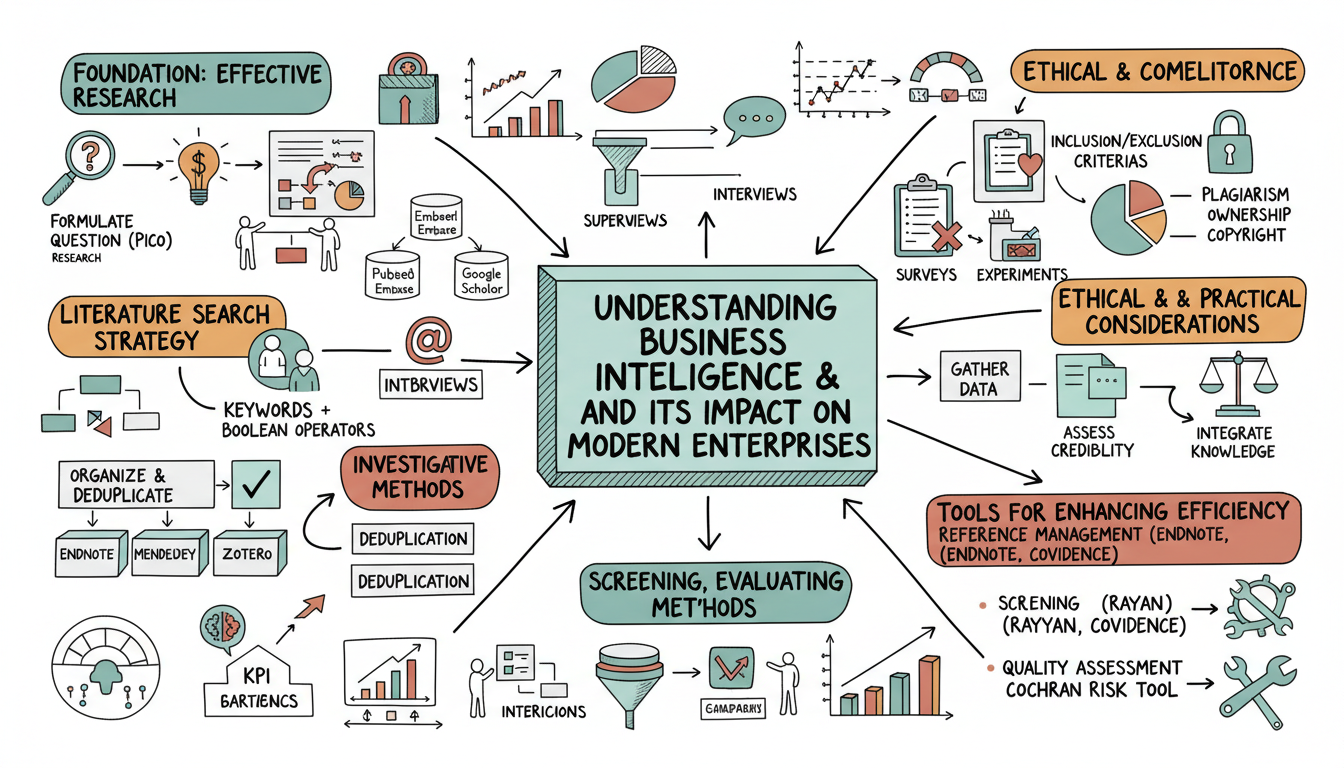
Conducting effective research is the backbone of successful BI initiatives. It begins with formulating a clear research question or hypothesis. This step involves articulating a specific, well-defined question using frameworks like PICO, which is particularly useful for clinical questions, or other frameworks suited to qualitative, quantitative, or mixed-methods research [1][2][3]. Identifying key concepts, synonyms, and related terms is essential for building a robust search strategy.
Choosing and focusing on the right topic is the next critical step. This involves selecting topics based on personal interest, course syllabus, or current issues [3]. Conducting introductory research on a few topics helps assess the availability of information and brainstorm relevant subtopics and questions. Background research through textbooks and academic books provides a comprehensive understanding of scholarly discussions from multiple angles [4].
Developing a Literature Search Strategy
A well-structured literature search strategy is vital for BI research. Searching multiple databases like PubMed, Embase, and Google Scholar, including gray literature and citation chasing from prior studies, ensures a comprehensive collection of data [2]. Using keywords with Boolean operators and collaborating with librarians can refine search strategies, making them more effective [1][2]. Tools like EndNote, Mendeley, and Zotero help deduplicate and organize research findings efficiently.
Selecting investigative methods and retrieving information is another crucial phase. Methods like surveys, interviews, and experiments, along with tools such as periodical indexes and databases, are employed to gather data [1]. Keeping organized notes and tracking sources using citation managers like Zotero and RefWorks ensures a streamlined research process.
Screening, Evaluating, and Synthesizing Data
Screening and selecting studies based on defined inclusion and exclusion criteria is essential for maintaining research integrity. Documenting these criteria in a protocol ensures transparency [2]. The screening process involves deduplication, title/abstract review, and full-text assessment using tools like Covidence and Rayyan [2].
Evaluating and extracting data requires assessing sources for credibility using criteria like methodology rigor [1][2]. Standardized data extraction forms help maintain consistency, capturing key elements like study details and outcomes. Synthesizing, analyzing, and integrating information sources with prior knowledge allows for a comprehensive understanding of the research topic [1].
Ethical and Practical Considerations in BI Research
Addressing ethical and practical considerations is crucial in BI research. This includes tackling issues like plagiarism, information ownership, and copyright [1]. Writing effectively for the intended purpose and seeking help from librarians when needed can enhance the quality of research output [1][3].
Tools for Enhancing Research Efficiency
Utilizing the right tools can significantly enhance research efficiency. Reference management tools like EndNote and Mendeley, screening/selection tools like Rayyan and Covidence, and quality assessment tools like the Cochrane Risk of Bias Tool are invaluable for BI professionals [1][2][5]. These tools streamline the research process, making it more manageable and effective.
In conclusion, understanding Business Intelligence and its impact on modern enterprises requires a solid foundation of effective research practices. By following structured research steps and leveraging the right tools, BI professionals can transform data into actionable insights, driving informed decision-making in their organizations.
[1] Source URL
[2] Source URL
[3] Source URL
[4] Source URL
[5] Source URL