In today's fast-paced business environment, staying ahead requires more than just intuition—it demands precise data-driven insights. This is where automating business metrics monitoring with DataLoyalty comes into play. As companies strive to make informed decisions swiftly, the integration of automated systems like DataLoyalty is transforming how businesses track and analyze their performance metrics.
The Power of Automation in Business Intelligence
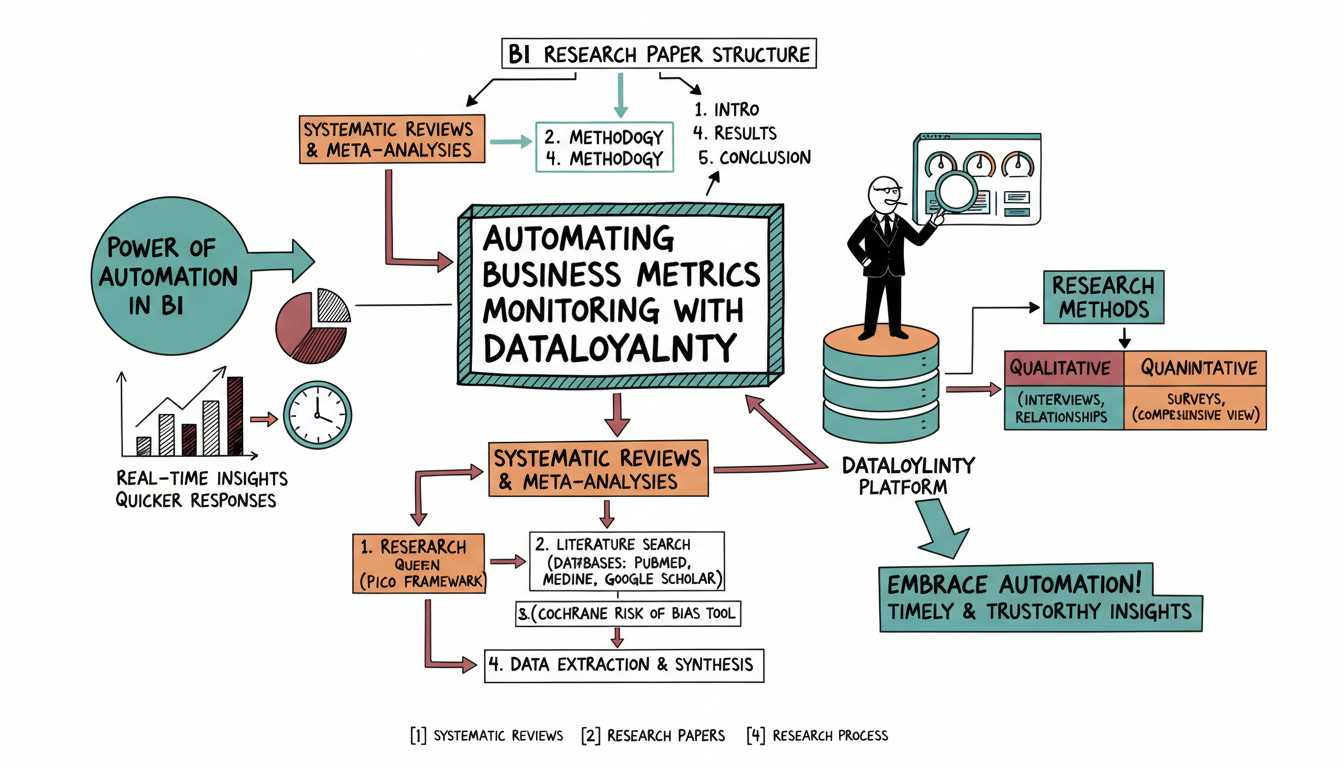
Automation in business intelligence (BI) is not merely a trend; it's a necessity. By automating the monitoring of business metrics, companies can ensure that they are always equipped with the latest data, allowing for quicker responses to market changes. DataLoyalty, a leading platform in this domain, offers a robust solution that seamlessly integrates with existing BI tools to provide real-time insights.
Systematic Reviews and Meta-Analyses: A Foundation for Reliable Insights
The process of systematic reviews and meta-analyses is crucial in synthesizing evidence from multiple studies, providing reliable insights into research questions. This rigorous approach minimizes bias and ensures that the data used in platforms like DataLoyalty is both accurate and relevant. The process begins with formulating a precise research question, followed by comprehensive literature searches, study selection, data extraction, quality assessment, and synthesis [1].
A well-defined research question is essential as it guides the entire process, ensuring that the data collected is relevant and useful. Frameworks like PICO (Population, Intervention, Comparison, Outcome) help structure these questions, enhancing the efficiency and relevance of the data gathered [1].
Literature Search Strategy: Capturing Diverse Studies
To ensure comprehensive data collection, searches span multiple databases such as PubMed, MEDLINE, and Google Scholar. This strategy captures a wide array of studies, using key concepts from the research question and expanding with synonyms and related terms [1]. Collaborating with librarians and using tools like Rayyan or Covidence further strengthens the search strategy, ensuring that no stone is left unturned [1].
Ensuring Quality and Objectivity
The quality of data is paramount. Using tools like the Cochrane Risk of Bias Tool for randomized trials ensures that the data used in platforms like DataLoyalty is of the highest quality [1]. This rigorous quality assessment ensures that business leaders can trust the insights provided by automated systems.
Data Extraction and Synthesis: The Heart of Automation
Data extraction and synthesis are at the heart of automating business metrics monitoring. Standardized forms and templates ensure consistency in data extraction, while meta-analyses integrate data statistically for quantitative reviews [1]. This structured approach ensures that the insights provided are both comprehensive and actionable.
The Broader Context of Research in Business Intelligence
Research papers in the BI field typically follow a structured format, including an introduction, literature review, methodology, results, discussion, and conclusion [2]. This structure ensures that the research is thorough and that the findings are presented clearly and logically.
Choosing the Right Research Methods
Selecting the appropriate research method is crucial. Qualitative methods, such as in-depth interviews, provide insights into thoughts and feelings, while quantitative methods, like surveys, measure relationships [3]. Mixed-methods approaches combine both to offer a comprehensive view, making them ideal for complex BI studies [3].
Conclusion: Embracing Automation with DataLoyalty
As businesses continue to navigate an ever-changing landscape, the need for reliable, real-time data has never been greater. Automating business metrics monitoring with DataLoyalty not only meets this need but also sets a new standard for how companies can leverage data to drive success. By integrating systematic reviews and rigorous research methods, DataLoyalty ensures that the insights provided are not only timely but also trustworthy, empowering businesses to make informed decisions with confidence.
[1] Source URL for systematic reviews and meta-analyses
[2] Source URL for broader research paper writing and methods
[3] Source URL for types of research methods
[4] Source URL for general research process tips