In the fast-evolving world of Business Intelligence (BI), DataLoyalty is making waves with its innovative approach to multi-source data integration. As businesses increasingly rely on data-driven insights, the ability to seamlessly integrate data from various sources is crucial. This blog post delves into DataLoyalty's strategies and methodologies, offering a comprehensive look at how they are setting a new standard in the industry.
The Importance of Multi-Source Data Integration
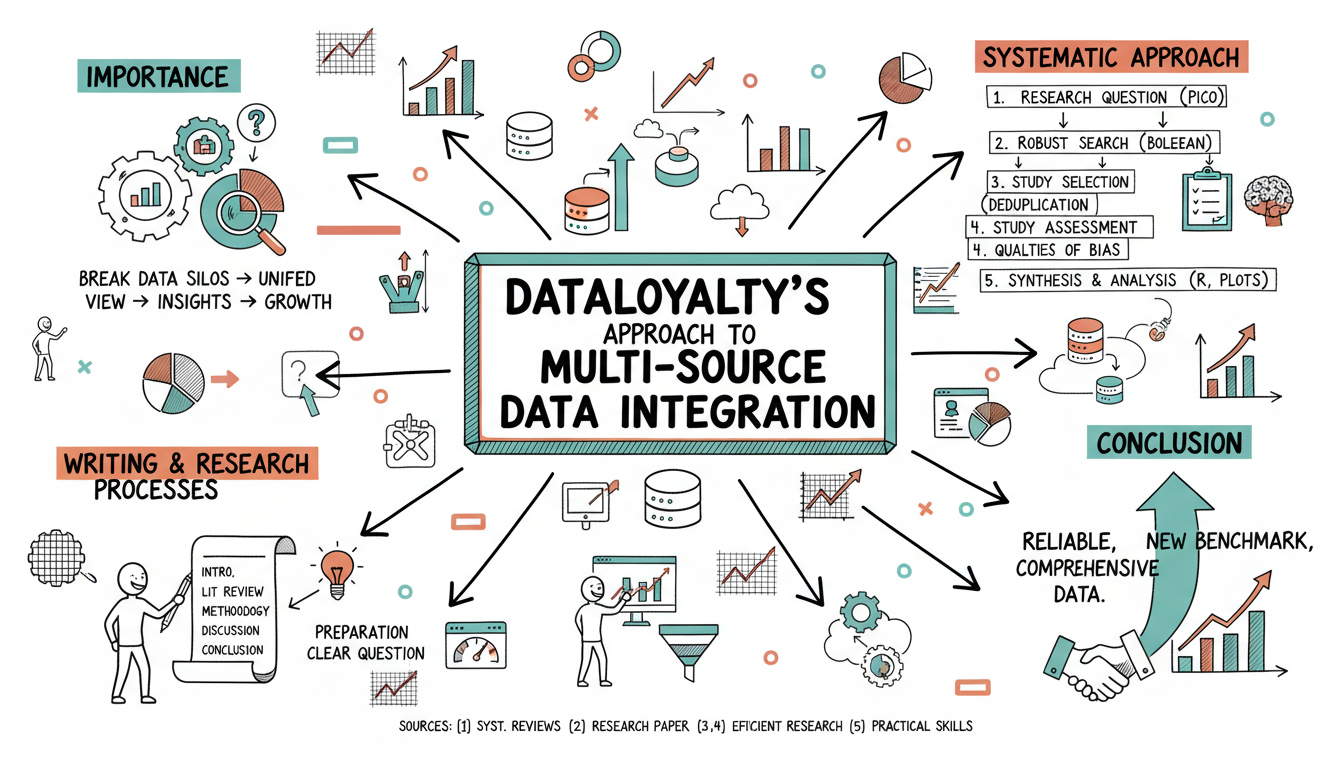
Data integration is the process of combining data from different sources to provide a unified view. For businesses, this means breaking down data silos and enabling more comprehensive analysis. DataLoyalty understands that effective data integration is key to unlocking valuable insights that drive decision-making and business growth.
Systematic Approach to Data Integration
DataLoyalty employs a systematic approach to ensure the reliability and accuracy of integrated data. This method is akin to systematic reviews and meta-analyses, which synthesize existing research through structured processes. According to a comprehensive guide on systematic reviews, the process begins with a well-defined research question and involves comprehensive literature searches across multiple databases like PubMed and Google Scholar [1].
Formulating the Research Question
A clear research question is crucial as it guides the entire data integration process. DataLoyalty uses frameworks similar to PICO, which are typically used for clinical questions, to define inclusion and exclusion criteria. This ensures that only relevant data sources are integrated, enhancing transparency and validity [1].
Robust Literature Search Strategy
DataLoyalty's strategy involves searching multiple bibliographic databases to gather diverse data sources. By collaborating with librarians, they develop robust search strategies that include identifying key concepts, synonyms, and using Boolean operators for precise queries [1]. This meticulous approach ensures that no valuable data is overlooked.
Study Selection and Screening
To manage the vast amount of data, DataLoyalty uses tools like EndNote and Mendeley for deduplication. They conduct title and abstract screening with multiple reviewers to ensure accuracy, resolving any disagreements with a third reviewer. This rigorous process ensures that only the most relevant data is integrated [1].
Quality Assessment and Data Handling
Evaluating the methodological rigor of data sources is crucial. DataLoyalty uses tools like the Cochrane Risk of Bias Tool to assess quality and employs standardized forms for consistent data extraction [1]. This ensures that the integrated data is not only comprehensive but also reliable.
Synthesis and Analysis
DataLoyalty employs both qualitative synthesis and meta-analysis techniques. They use statistical software like R to assess effect sizes and visualize data with forest and funnel plots [1]. This comprehensive analysis provides businesses with actionable insights that are both detailed and easy to understand.
Writing and Research Processes
The process of integrating data is similar to writing a research paper, which follows a standard format: introduction, literature review, methodology, results, discussion, and conclusion [2]. DataLoyalty's approach mirrors this structure, ensuring that each step is meticulously planned and executed.
Efficient Research Techniques
Preparation is key to successful data integration. DataLoyalty prepares by browsing journals and following paper trails to gather insights before analysis [4]. They start with a clear research question and choose an appropriate methodology, documenting the process and sources meticulously [3].
Conclusion
DataLoyalty's approach to multi-source data integration is setting a new benchmark in the BI industry. By employing systematic and structured methodologies, they ensure that businesses can access reliable and comprehensive data insights. As the demand for data-driven decision-making grows, DataLoyalty's innovative strategies will undoubtedly continue to lead the way.
[1] Source URL for Systematic Reviews and Meta-Analyses
[2] Source URL for Broader Research Paper Writing
[3] Source URL for Efficient Research Techniques
[4] Source URL for Efficient Research Techniques
[5] Source URL for Practical Research Skills Tutorials