In today's fast-paced digital world, effective data management is crucial for businesses aiming to leverage their data for strategic decision-making. DataLoyalty, a leader in the Business Intelligence and analytics industry, has unveiled a comprehensive strategy that promises to revolutionize how companies manage and utilize their data. This blog post delves into DataLoyalty's innovative approach, exploring the tools and methodologies they employ to ensure seamless data management.
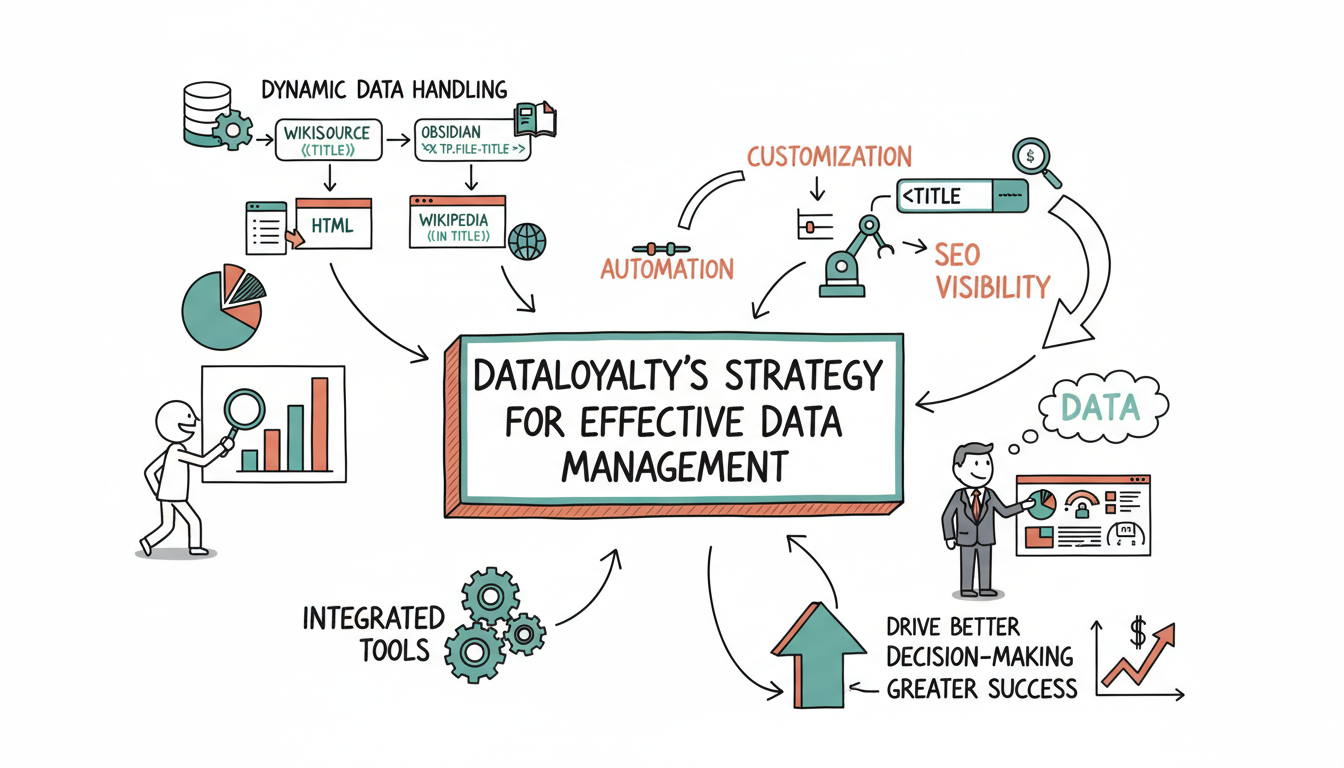
DataLoyalty's strategy is built on the foundational principle of dynamic data handling, drawing inspiration from templating systems like those used in platforms such as Wikisource, Obsidian, HTML, and Wikipedia. These systems utilize the {{TITLE}} syntax, a powerful tool for dynamically inserting and generating document titles. This approach not only enhances data organization but also improves accessibility and searchability across digital platforms.
Wikisource and Obsidian: Pioneers in Templating
Wikisource's {{Title}} template exemplifies how customizable parameters can be used to create visually appealing and functional document titles. By allowing users to adjust font size, alignment, and style, Wikisource ensures that titles are not only informative but also aesthetically pleasing. This flexibility is mirrored in DataLoyalty's strategy, where customization plays a key role in data presentation and reporting (source).
Similarly, Obsidian's note-taking app leverages templating to streamline data entry and organization. The use of {{title}} or <% tp.file.title %> in templates allows for automatic replacement with the file name, ensuring consistency and ease of access. DataLoyalty adopts a similar approach, employing automation to reduce manual data entry errors and enhance data integrity (source).
HTML and SEO: Enhancing Visibility
The <title> element in HTML is another cornerstone of DataLoyalty's strategy. By adhering to SEO best practices, such as crafting descriptive and accurate titles, DataLoyalty ensures that their data is easily discoverable and ranks highly in search engine results. This focus on visibility is crucial for businesses seeking to maximize their online presence and reach a wider audience (source).
Wikipedia's In_title Template: Precision in Search
DataLoyalty also draws inspiration from Wikipedia's {{In title}} template, which facilitates precise searches by matching exact page names or specified phrases. This level of precision is integral to DataLoyalty's data management strategy, enabling businesses to quickly locate and utilize the information they need. By incorporating similar search functionalities, DataLoyalty enhances the efficiency of data retrieval processes (source).
Integrating Tools for Optimal Data Management
DataLoyalty's strategy is not just about adopting existing technologies but also about integrating them into a cohesive system that meets the unique needs of each business. By combining tools like Obsidian's dynamic title generation and HTML's SEO-focused title creation, DataLoyalty offers a comprehensive solution that addresses both the technical and strategic aspects of data management.
In conclusion, DataLoyalty's strategy for effective data management is a testament to the power of innovative thinking and the strategic use of technology. By drawing on the strengths of templating systems and SEO practices, DataLoyalty empowers businesses to harness their data effectively, driving better decision-making and achieving greater success in the competitive landscape of Business Intelligence and analytics.