In today's fast-paced business environment, having a robust data infrastructure is crucial for making informed decisions. DataLoyalty is at the forefront of this transformation, offering custom ETL (Extract, Transform, Load) architectures tailored to meet the unique needs of your business. But how does DataLoyalty ensure that their solutions are both effective and efficient? Let's dive into the process they use to build these custom architectures.
Defining the Research Question
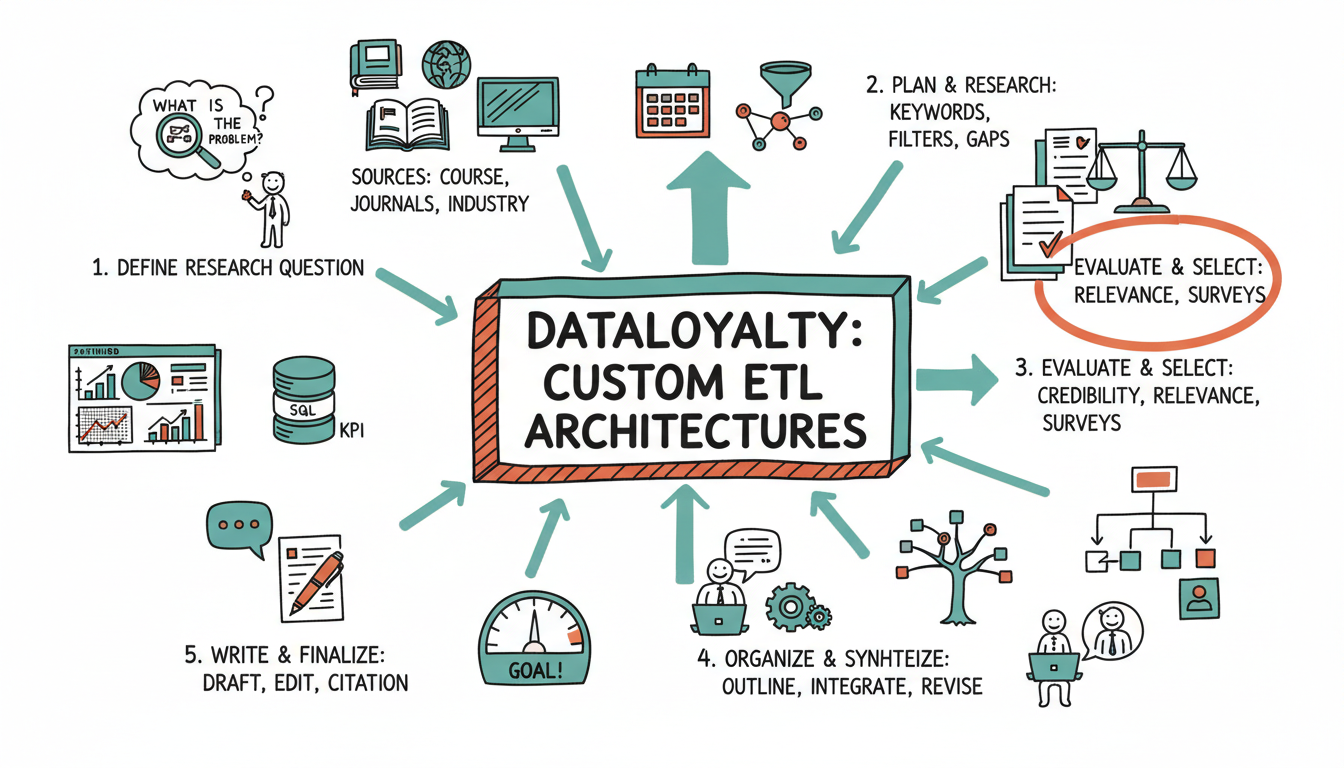
The first step in creating a custom ETL architecture is to clearly define the business needs and objectives. DataLoyalty starts by articulating a specific research question or hypothesis that will guide the entire process. This involves identifying key interests and requirements from various sources such as course materials, textbooks, and industry journals. By conducting preliminary searches on potential topics, DataLoyalty can assess the available information and ensure that the architecture is designed to address the most pressing business challenges [1][2][5].
Planning and Conducting In-Depth Research
Once the research question is defined, DataLoyalty moves on to planning and conducting in-depth research. This involves identifying a diverse range of sources, including academic journals, credible websites, and specialized databases. By developing a comprehensive search strategy that includes relevant keywords and filters, DataLoyalty can efficiently gather the necessary materials. This stage also involves reading broadly to understand the context, identify gaps, and uncover any controversies that might impact the architecture [2][3][4].
Evaluating and Selecting Sources
With a wealth of information at their disposal, DataLoyalty evaluates and selects the most credible sources. This involves judging the credibility of each source based on authorship, publication date, and relevance to the research question. By prioritizing reputable outlets over unverified web content, DataLoyalty ensures that their ETL architectures are built on a solid foundation of reliable data [1][2][5]. If necessary, they adjust their methods to incorporate additional data collection techniques such as surveys or interviews [1].
Organizing and Synthesizing Information
The next step is to organize and synthesize the gathered information. DataLoyalty creates a detailed outline that includes main sections, subtopics, and a logical sequence to guide the architecture's development. By analyzing and integrating the sources with prior knowledge, they can revise their initial hypothesis and ensure that the final ETL architecture is both comprehensive and effective [1][2][4]. This structured approach helps in creating a coherent output that aligns with the business's goals.
Writing, Revising, and Finalizing
Finally, DataLoyalty drafts the ETL architecture using active voice and precise language, backed by evidence such as statistics and examples. Proper citation is crucial to avoid plagiarism and respect intellectual property rights [1][2]. The draft undergoes rigorous editing for clarity and conciseness, with feedback from peers and instructors to ensure quality. By staying organized with notes, drafts, and source trackers, DataLoyalty can deliver a polished and professional ETL architecture that meets the specific needs of their clients [2].
In conclusion, DataLoyalty's approach to building custom ETL architectures is a testament to their commitment to excellence. By following a structured research process, they ensure that their solutions are not only tailored to the unique needs of each business but are also grounded in credible and reliable data. This meticulous approach positions DataLoyalty as a leader in the Business Intelligence and analytics industry, helping businesses unlock the full potential of their data.
Sources:
[Source URL]
[Source URL]
[Source URL]
[Source URL]
[Source URL]