In today's fast-paced business environment, having a reliable partner in business intelligence is crucial for success. Enter DataLoyalty, a company that stands at the forefront of the Business Intelligence (BI) and analytics industry. With a focus on delivering cutting-edge solutions, DataLoyalty empowers businesses to make informed decisions through comprehensive data analysis and visualization.
The Importance of Structured Research in Business Intelligence
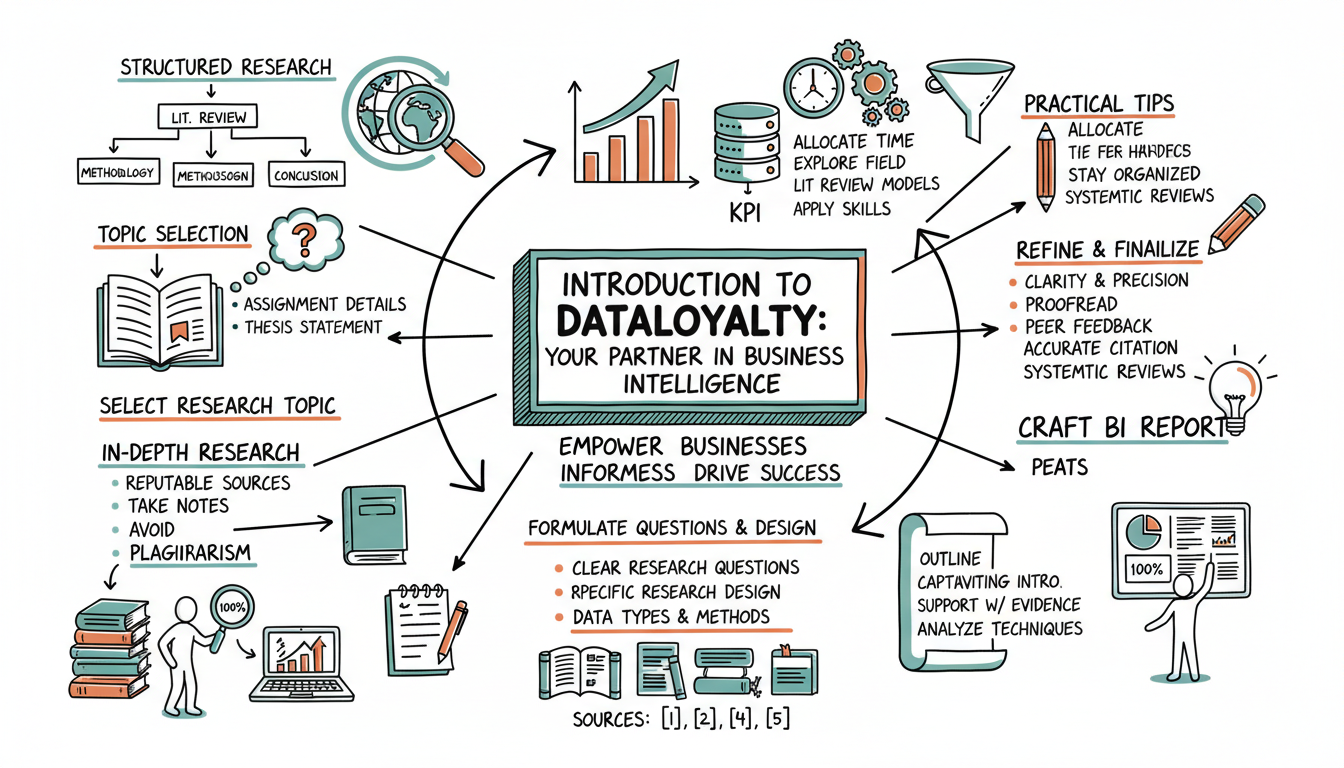
Understanding the structure of a research paper is fundamental to developing effective BI strategies. A typical research paper includes an introduction, literature review, methodology, results, discussion, and conclusion [1]. This structured approach ensures that data is collected, analyzed, and presented in a way that is both coherent and impactful.
Selecting a research topic is the first step in this process. It's essential to choose a clear and specific topic that aligns with the scope of your project [1][3]. This involves reviewing assignment details such as length, formatting, and citation style, and refining your topic through early research to develop a strong thesis statement.
Conducting In-Depth Research for Business Insights
For BI professionals, conducting thorough research is key to gaining valuable insights. This involves using reputable sources like academic journals, books, and credible websites [1][2][3]. By taking detailed notes and tracking sources, you can avoid plagiarism and create a preliminary outline that organizes your findings logically.
A critical component of the research process is formulating clear research questions and objectives [2][3]. These questions should be specific and complex, requiring in-depth analysis rather than simple yes/no answers. Developing a robust research design is also crucial, as it determines the types of data collected and the methods used for analysis [3][4].
Crafting a Well-Structured BI Report
Once the research is complete, the next step is to outline and write the report. A well-structured outline organizes ideas logically, with main sections and supporting points [1]. The introduction should be captivating, providing background and a clear thesis statement.
Supporting arguments with evidence is essential, using statistics, examples, and expert opinions to bolster your claims [1]. For empirical papers, it's important to detail data acquisition and analysis techniques [4]. This level of detail ensures that your findings are both credible and actionable.
Refining and Finalizing Your BI Insights
The final steps in the research process involve refining and editing your work. Revising for clarity and precision, eliminating redundancy, and proofreading for grammar and structure are all critical [1]. Seeking feedback from peers or instructors can provide valuable insights into areas for improvement.
Accurate citation of sources is also crucial, ensuring that your work adheres to the required style [1]. Concluding your report by restating the thesis and main points reinforces the significance of your findings without introducing new ideas.
Systematic reviews add rigor to the research process, using explicit methods to minimize bias and aggregate evidence [2]. This approach is essential for explaining inconsistencies and providing a comprehensive overview of the topic.
Practical Tips for BI Professionals
For BI professionals, allocating time generously for research is vital [4]. Exploring your field thoroughly helps in settling on a topic that is both relevant and impactful. Following models for literature reviews, such as search/screening, data extraction/analysis, and synthesis, ensures a comprehensive approach [2].
Staying organized with sources, notes, and drafts is crucial for maintaining clarity and coherence throughout the research process [1]. Practical skills gained from research methods tutorials can be applied across various needs, enhancing your ability to deliver insightful BI solutions [5].
In conclusion, DataLoyalty is your trusted partner in navigating the complex world of business intelligence. By leveraging structured research methodologies and comprehensive data analysis, DataLoyalty empowers businesses to make informed decisions and drive success in today's competitive landscape.
Sources: