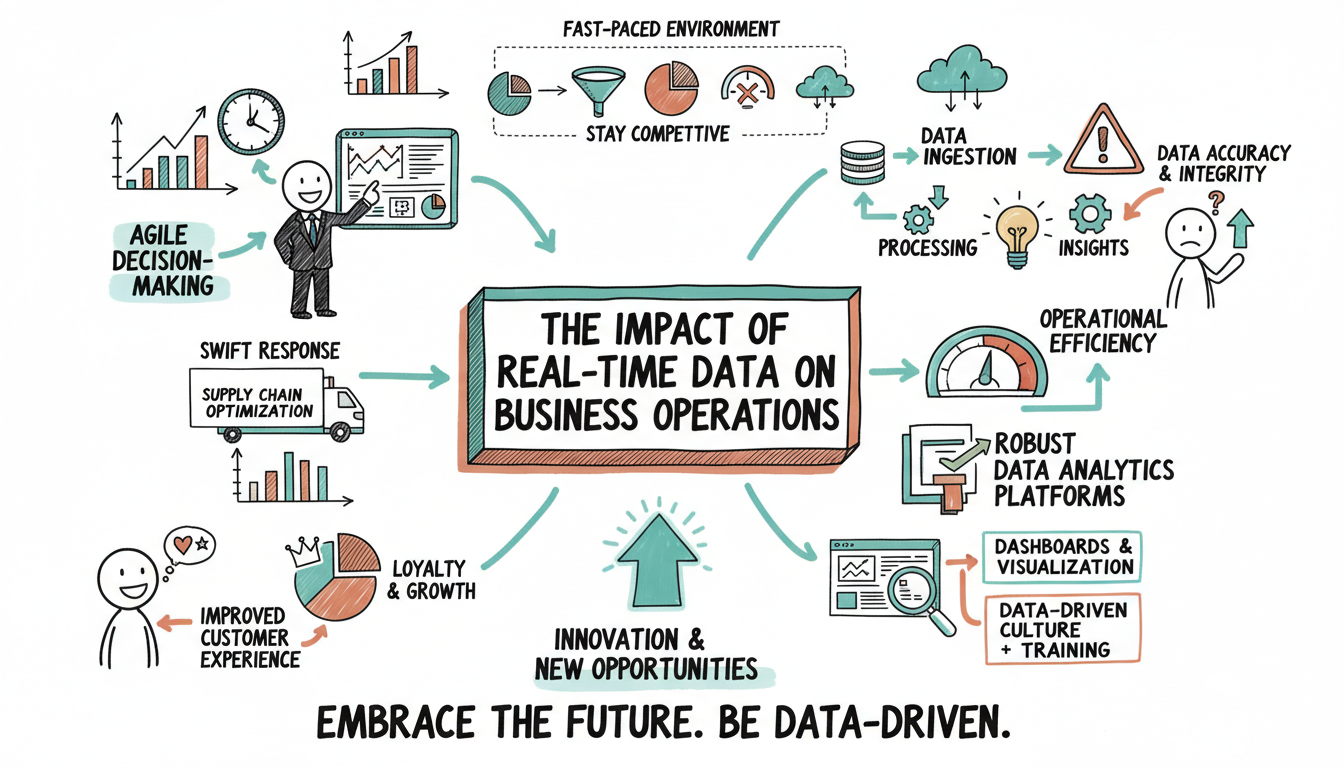
In today's fast-paced business environment, the impact of real-time data on business operations is more significant than ever. Companies are increasingly relying on real-time data to make informed decisions, optimize processes, and stay competitive. This shift towards real-time analytics is transforming how businesses operate, enabling them to respond swiftly to market changes and customer needs.
Real-time data provides businesses with up-to-the-minute insights, allowing for more agile decision-making. This immediacy is crucial in industries where timing is everything, such as finance, retail, and logistics. By leveraging real-time data, companies can monitor their operations continuously, identify trends as they emerge, and make proactive adjustments to their strategies.
One of the key benefits of real-time data is its ability to enhance operational efficiency. For example, in supply chain management, real-time data can help track inventory levels, monitor shipment statuses, and predict potential disruptions. This level of visibility allows businesses to streamline their operations, reduce waste, and improve customer satisfaction.
Moreover, real-time data plays a vital role in improving customer experiences. By analyzing customer interactions and feedback in real-time, businesses can tailor their offerings to meet customer expectations more effectively. This personalized approach not only boosts customer loyalty but also drives revenue growth.
To fully harness the power of real-time data, businesses need to implement robust data analytics platforms. These platforms should be capable of processing large volumes of data quickly and delivering actionable insights. Tools like dashboards and data visualization are essential for presenting complex data in an easily digestible format, enabling decision-makers to grasp insights at a glance.
However, the transition to real-time data analytics is not without challenges. Businesses must ensure data accuracy and integrity, as real-time decisions based on flawed data can lead to costly mistakes. Additionally, integrating real-time data analytics into existing systems requires careful planning and execution.
Incorporating real-time data into business operations also necessitates a cultural shift within organizations. Employees at all levels need to embrace data-driven decision-making and be equipped with the necessary skills to analyze and interpret data. This involves investing in training and development programs to build a data-literate workforce.
As businesses continue to navigate the complexities of the digital age, the importance of real-time data cannot be overstated. It is a powerful tool that can drive innovation, enhance competitiveness, and unlock new opportunities. By embracing real-time data analytics, businesses can position themselves for success in an increasingly data-driven world.
In conclusion, the impact of real-time data on business operations is profound. It empowers businesses to make informed decisions, optimize processes, and deliver exceptional customer experiences. As technology continues to evolve, the potential of real-time data will only grow, offering businesses new ways to thrive in a dynamic marketplace.